What Chemical Processes Are Used to Make Plastic Bottles? Distributor’s Full Guide

1. Core Chemical Processes in Plastic Bottle Manufacturing
PET plastic bottles rely on four fixed chemical and physical reaction stages.
Every step controls bottle safety, durability and surface quality.
1.1 PET Polymerization (Raw Material Forming)
This is the foundation of all standard plastic bottle manufacturing.
Factories use two monomer materials: terephthalic acid and ethylene glycol.
Two core chemical reactions happen in sealed reaction tanks:
• Esterification: Monomers react under high temperature to form prepolymer liquid
• Polycondensation: Vacuum heating extends molecular chains to form stable solid PET resin
Qualified polymerization creates pure, uniform PET pellet raw materials.
Incomplete reactions leave impurity molecules, causing foggy bottle surfaces.
Top plastic bottle manufacturers in usa strictly control reaction temperature and vacuum level.
1.2 Thermal Melting & Plasticization
Solid PET pellets turn into flowing liquid plastic through thermal treatment.
Factories heat pellets steadily between 250℃ and 280℃.
This process breaks partial molecular adhesion for uniform fluidity.
Even heating ensures consistent wall thickness for finished bottles.
Overheating causes molecular degradation and brittle bottle bodies.
Underheating leads to uneven melting and visible bottle streaks.
1.3 Biaxial Stretching & Molecular Orientation
This is the most critical chemical-physical process for bottle strength.
Heated PET preforms reach 95℃ to 110℃ for softening treatment.
Machines stretch preforms vertically and blow air for radial expansion.
Dual-direction stretching rearranges disordered PET molecular chains.
• Ordered molecular structure improves tensile strength by 35%
• Transparency and pressure resistance reach food-grade standards
• Finished bottles resist deformation during storage and transit
This process differentiates premium plastic empty bottles wholesale from low-grade products.
1.4 Rapid Cooling & Molecular Fixation
High-speed cooling locks the optimized molecular structure permanently.
Molds use 15℃ to 25℃ circulating cooling water.
Fast cooling prevents molecular rebound and shape distortion.
Stable cooling ensures zero shrinkage for customized bottle sizes.
Unqualified factories speed up production with insufficient cooling.
This causes later deformation and leakage complaints for spice and food packaging.
2. How Process Control Decides Wholesale Product Quality
Most wholesale quality issues come from simplified chemical processes.
You can judge supplier reliability via these four practical standards.
2.1 Impurity Control for Food-Grade Safety
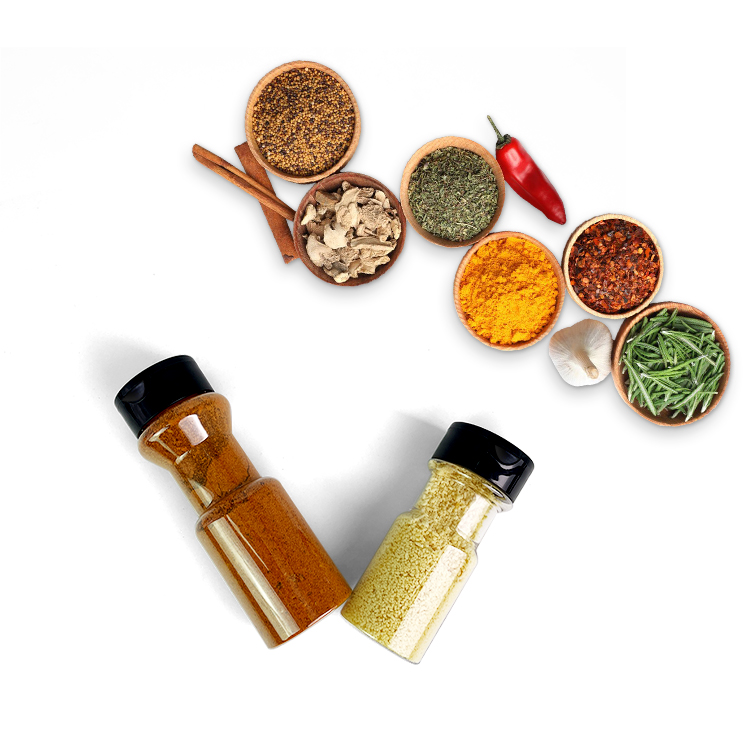
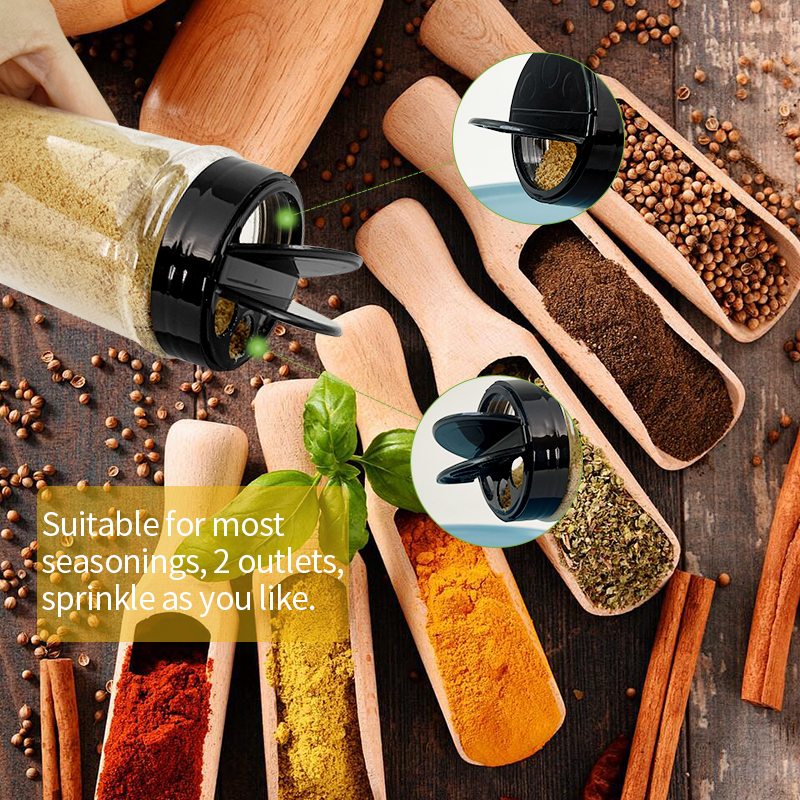
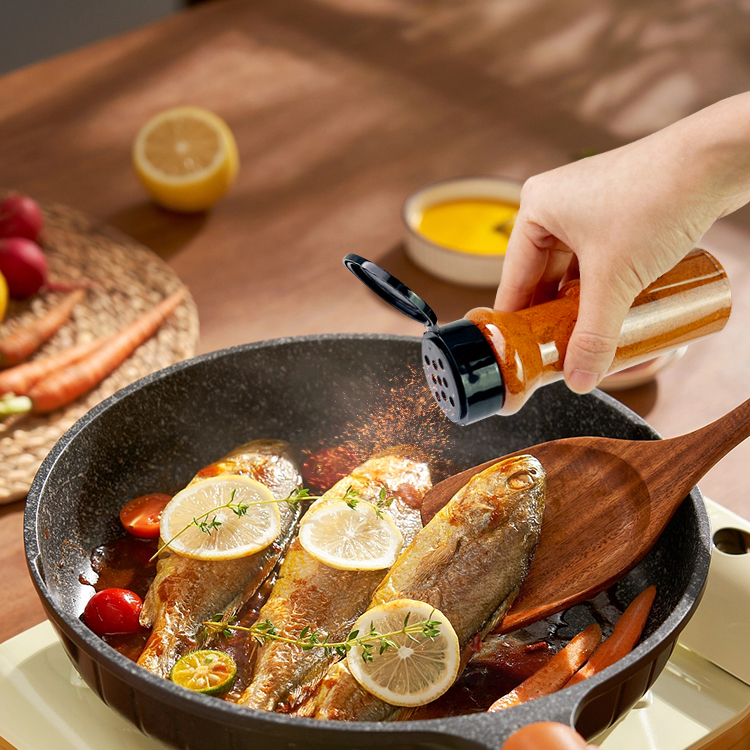
Plastic spice bottles with lids wholesale requires strict food-grade standards.
Standard polymerization removes harmful chemical residues completely.
Unregulated factories mix recycled PET pellets to cut costs.
Mixed materials retain residual chemicals and fail food safety tests.
2.2 Temperature Stability Control
Full-automatic factories keep heating temperature error within ±2℃.
Small workshops have unstable heating with error over ±10℃.
Unstable temperature causes 3–5 times higher defective rates.
2.3 Stretching Pressure Consistency
Qualified factories maintain 1.5–4.0MPa blowing pressure steadily.
Stable pressure creates uniform wall thickness for every bottle.
Fluctuating pressure leads to thin walls and easy breakage.
2.4 Post-Process Aging Treatment
Top manufacturers add short aging treatment before packaging.
This releases internal molecular stress and prevents later deformation.
Most low-price suppliers skip this step to shorten lead time.
3. Real Wholesale Case: Process Defects Cause Batch Losses
A US regional packaging distributor faced heavy losses in 2024.
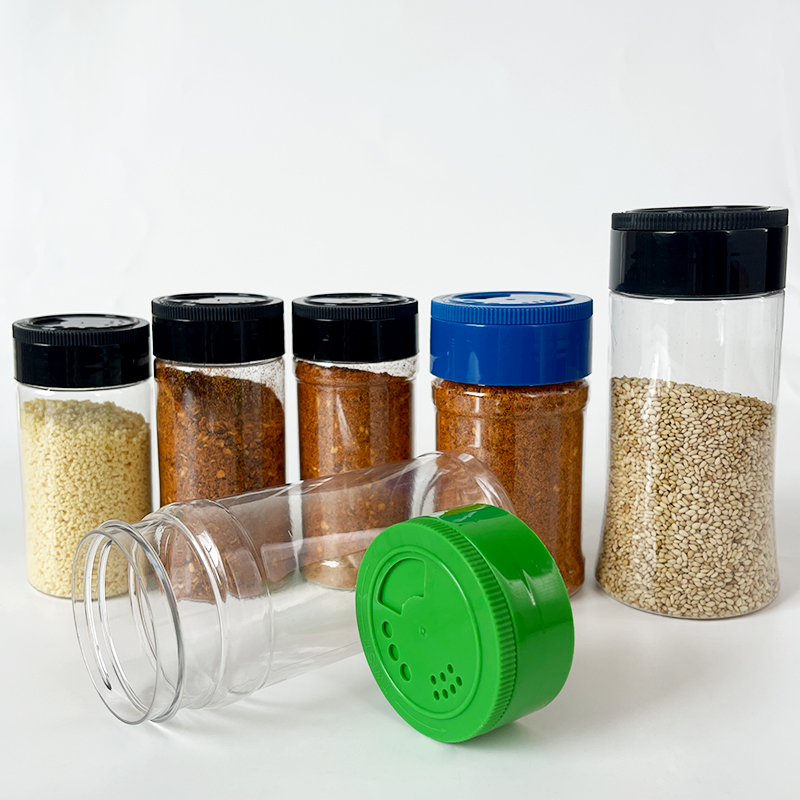
The buyer sourced 50,000 units of plastic spice bottles with lids wholesale at ultra-low prices.
The supplier simplified polymerization and cooling processes to speed up output.
The batch showed obvious quality problems after delivery:
• 16% of bottles had foggy surfaces due to incomplete impurity removal
• 12% of bottles deformed after one week of inventory storage
• Partial bottle walls were too thin and cracked during transit
The distributor paid client compensation and lost two long-term spice brand clients.
Later, the buyer switched to standardizedplastic bottle manufacturers in usa.
Strict chemical process control improved overall order quality obviously:
• Batch defective rate dropped from 16% to 1.2%
• Zero deformation or foggy surface complaints
• 100% pass rate for food safety testing
• Distributor’s repeat order rate increased by 24%
This case proves chemical process precision decides long-term wholesale profits.
CTA: Source Process-Stable Plastic Empty Bottles Wholesale
Understanding manufacturing chemical processes helps you avoid unqualified suppliers.
Process quality directly controls your wholesale order stability and client reputation.
We are a professional factory with full standardized plastic bottle manufacturing systems.
We deliver high-quality plastic empty bottles wholesale for global distributors.
We match the strict standards of formal plastic bottle manufacturers in usa.
We provide customized plastic spice bottles with lids wholesale with full process reports.
Our core wholesale advantages:
• Full chemical process monitoring with stable molecular structure
• Food-grade safety certification for food and spice packaging
• Defective rate strictly controlled below 1.2%
• Transparent pricing and on-time bulk delivery
Contact our team today to get free samples and exclusive wholesale quotes.
Build risk-free long-term plastic bottle supply cooperation now.
How Is a Plastic Bottle Manufactured? Full Process Guide for Packaging Distributors
Who Are the Leading Manufacturers of Paper Cans? Complete Guide for Packaging Distributors